Beltane – 30th April into 1st May
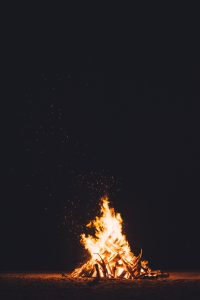
Beltane is a fire festival and marks the beginning of summer and is named after the sun god Bel. Bonfires, known as balefires, were traditionally lit on hilltops to honour this god and were beacons to welcome and embrace the warmth of the sun and summer. Celts were known to drove their cattle through two sacred fires to protect them before sending them out to pasture as this was considered the ‘bel-tine’ – bright or luck time.
Meaning of Beltane: The beginning of summer, fertility and union.
Symbols: The maypole, flowers.
Herbs: Hawthorn, may blossom, lilacs.
Incense: Lilac, rose, vanilla.
Foods: Dairy foods, sweet foods such as egg custard, honey and oats.
Colours: Red, dark green and white.
Crystals: Bloodstone, emeralds, rose quartz and sapphires.
Ways to Celebrate: Joining in maypole dancing, taking time in nature to embrace the waking life and the smell of spring in the air, burning away the last of winter with bonfires, going a-maying: taking a walk through woodland at dusk and collecting fresh flowers.
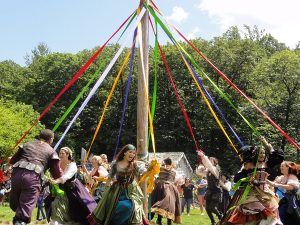
This time of year is also given over to the Goddess Maia, who gives her name to May. At this time of year, men and women would dance around the maypole, an ancient symbol of fertility. Wishes would be imbued within the ribbons of the maypole where they would be left the come to fruition throughout the year.
As with Imbolc and Lughnasadh, Beltane see people visiting holy wells as part of the celebrations. They would pray for health while walking sunwise (clockwise) around the well and leave offerings such as strips of material that were dipped in the holy well known as clooties and/or coins. The first water drawn from the well at Beltane was considered especially potent, as with the morning dew. Water from the well or dew that was collected would be stored in glass jars in the sunlight, and later filtered; and was considered to increase sexual attractiveness, maintain youthfulness, and help with skin ailments.
Beltane stands opposite Samhain in the wheel of the year, and just as the veil between the living and the dead is at its thinnest at Samhain, so the worlds of the living and the fae are at their closest. People would takes steps to ward off or appease the fae folk, leaving gifts of food and milk at doorsteps or places associated with fairies.
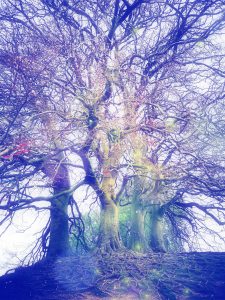
In many cultures, people would visit trees such as hawthorn and birch which are closely associated to fairies. They would make a wish and affix a token of their wish to the tree. If you’re ever walking through the countryside and find a tree festooned in ribbons and charms, you’ve found such a tree.
How do you celebrate Beltane, or do you have any stories of this time of year? Get in touch and let me know