Ostara is the second spring festival of the pagan year and is when the vernal equinox of spring when day and night are at equal lengths. It is also a time that is sacred to the Saxon Luna Goddess of the dawn, Ostara (sometimes known as Eostre), and she is depicted as a young woman surrounded by light and flowers. It is a time that marks when more light will come to the world and of the promise of new beginnings and prosperity the plants that are coming to life, and a time of fertility and birth.

When is Ostara? Between 20th – 23rd March
Meaning of Ostara: A time of rebirth and renewal, the return of light to the world.
Symbols: eggs, rabbits, spring flowers and seeds
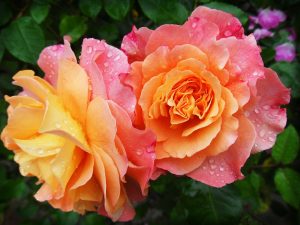
Herbs: crocus, daffodils, jasmine, roses, strawberries, violets
Incense: jasmine, rose
Foods: eggs, honey, bread, seeds, green leafy vegetables
Colours: pastels, yellow, green, pink, blue
Crystals: rose quartz, aquamarine, jasper, moonstone
Ways to Celebrate: Bonfires, clearing away clutter and weeds, planting seeds, starting a new project, taking time out in nature to bathe in the emergence of spring.
As with Imbolc, this is a time of year for clearing out the old, the clutter and the weeds to make way for the new. As a time of equilibrium, self banishments would be done at this time of year to free oneself from anything that hindered their progress. Rituals and/or ceremonies to regain things that were lost, or to gain qualities would also be performed during Ostara. Seeds would be blessed for planting and eggs would be buried to encourage fertility.
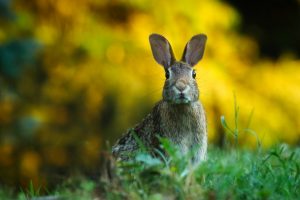
Rabbits and hares are a symbol commonly associated with Ostara due to their connection with the earth and their virile fertility, especially during the spring. This is where the saying “mad as a March hare” comes from, and why Ostara/Eostre is commonly depicted with hares.
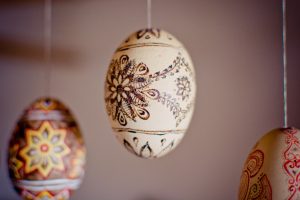
Eggs (and all seeds) are another common symbol for this time. They contain potential and are full with the promise of new life. Eggs are also the symbol for the whole universe in many traditions, containing the perfect balance between male and female, and light and dark within the yolk of the egg, and the egg white.
The ritual and painting of eggs during this time goes back throughout history and many different cultures. Decorated and engraved ostrich eggs have been found in Africa that are over 60,000 years old.
Christianity later adopted the festival of Ostara and many of the symbols as their celebration of the resurrection of Jesus, Easter; staining eggs red was typically used among the early Christians in memory of the blood of Christ from his crucifixion.