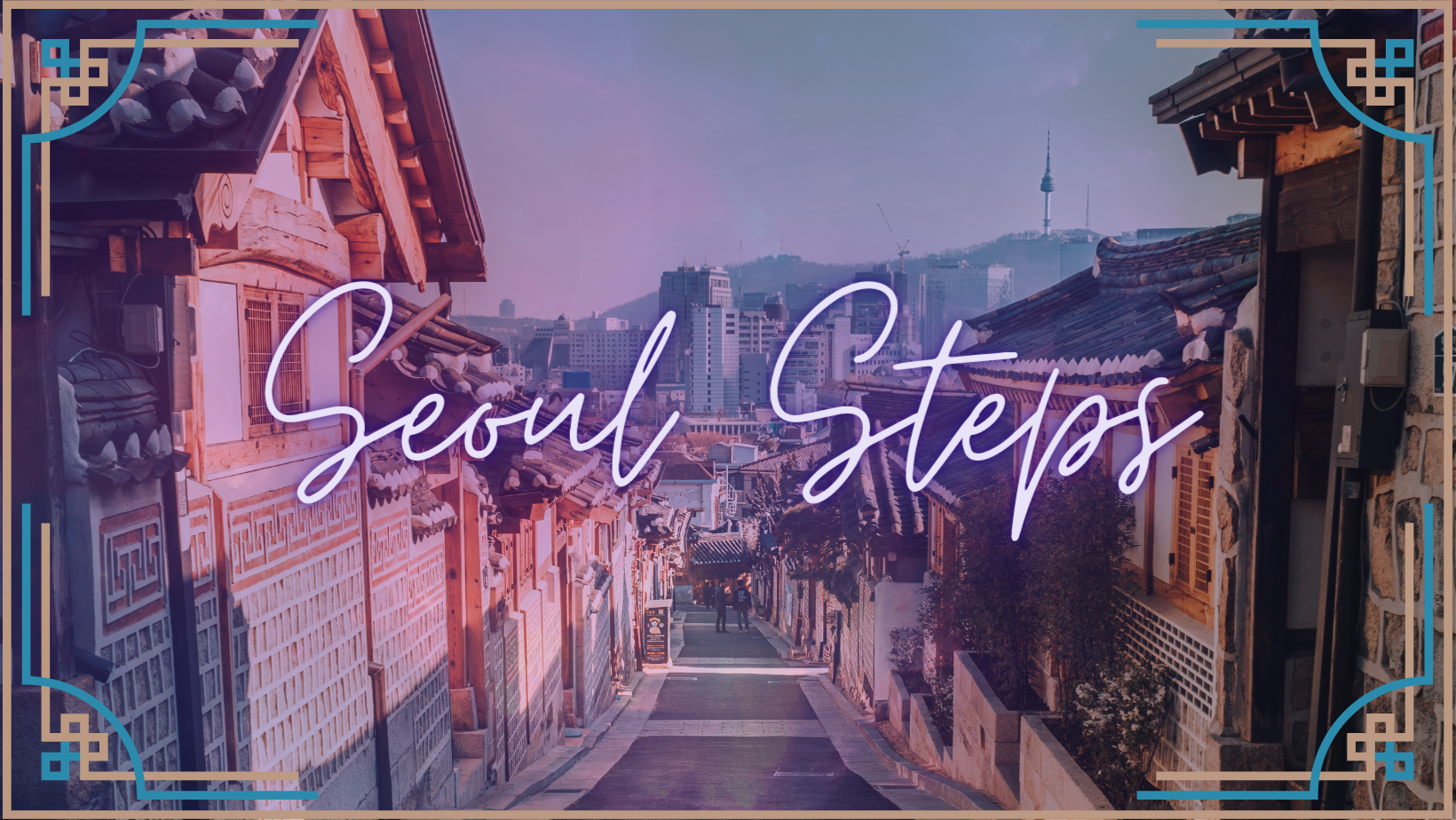
Day One: Finding my Place.

My heart raced as quickly as the moving traffic in all directions around me. An hour had passed since I’d been dropped off with several others. I was still sat cross legged on the floor with my luggage organised around me in a protective wall: a large suitcase, a holdall, a small purse bag, and a ginormous box of coffee which has its own story. I watched the taxis come and go from the station with people getting in and out with ease. Busses and coaches continually slid through the bus lane on the main road while cars and bikes wove throughout. Behind me, I could hear trains and below me, the mumble of the subway. Stairs up. Stairs down. Doors everywhere.
Back in Lampeter, there were two main roads and one bus service, and a taxi company run by one family. No overground trains for an hour’s drive and no subway in the entire country. I’m certain the total population of Lampeter is about a quarter of the people in my immediate vicinity within the station. The difference that really stood out was just how clean the air was even in the heart of the city. There was the slight hint of fuel, but it was nothing compared to the main road I lived on. Here, there were no HGVs or road tractors thundering past. Any goods being moved were in Suzuki carry vans (or something of its kind), or on the back of bikes. Nature and plant life was a welcome inclusion to the city. All around were gardens and parks, rooftop gardens, and green walls. Most of the plants were still dormant and waiting for the spring, for now it was only the evergreens breathing fresh life into the air.
I looked down at my phone. Here, it was 9:30am. Most of the people I could ask for help would be fast asleep, but I had one friend who was in New York state. I was grateful she was staying awake late to make sure I was okay. We had been messaging for the hour I sat on the cold, concrete floor in the middle of all public transport options. Her contact was all that had stopped me breaking down in tears in front of the hordes of fast-moving people who all knew where they were going. Some looked at me with curiosity, maybe even a little sympathy. Mostly I was invisible to the masses that were focussed on their phones as they moved as one.
I had only seen my room in the quarantine hotel before today. I had originally planned to travel in from the airport where everything I needed was immediately accessible – as well as the information and tourist help desks. Though as I received my checkout instructions, I discovered I had two options: a midnight taxi to the hotel, or the free coach shuttle to the station. Since my bank card had failed me in Munich Airport with the lack of pin number option, and all I had on me were cards that might not work, £20 and €10, I had decided on the latter expecting a cash point to be apparent. I looked along the street for any hint of where I might find a cash point. Everything was so different. Google maps didn’t work here. All I could do was stare at the buildings with the combination of bold, colourful Hanja and Hangul signage as I messaged friend.
Enough. I stood up and awkwardly hauled my luggage over to the taxi rank and observed what everyone was doing. Living in such a rural area and being able to drive, I’d never hailed a taxi before. After a few minutes of failing my current mission of getting into a taxi, a young woman paused from entering a cab and looked at me. First a frown, then a much softer expression as she registered how close I was to all-out panic attack.
“Are you trying to get in?” she asked. Her English was fantastic, and I almost cried at the unexpected help. I nodded and shuffled closer. All of my body was trembling as I brought up the hotel details on my phone. We exchanged fragmented sentences of English and Korean with the taxi driver for several more minutes until he understood where I was wanting to go. I thanked the stranger who had given up her taxi to help me, and she welcomed me to Korea with the sweetest smile. I clutched my chest that was aching from several hours of frenzied beating as the taxi pulled away, securing her kindness and her welcome in my heart. I wanted to be sure I would remember her warmth as I explored this new land.
I messaged my friend to let her know I had at last escaped Seoul Central Station, and I prayed my card would work. If it didn’t…well…that was a problem for then. I sat back into my seat and took in as much detail as I could. The city was predominately a grid layout, the buildings being mostly three to four level blocks of concrete buildings, with the street level showing the many different faces of retail. Towering glass skyscrapers reflected the heavens; the prospect of spring shimmered across the mirrored surfaces with soft golden light.
The historic city was interspersed amongst the modern. Temples of faded red lacquer walls nestled among handsome red pines and dormant shrubs: the only colour amongst the wash of grey. Remnants of the old city wall rose in and out of sight like a formidable sandstone snake where the old city gates still stood; crowned with two-tiered buildings of the same faded red wood and the original city entrances below.
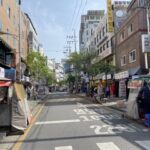
The driver left the main road and entered the oldest part of the city: Insadong. Here the buildings felt more welcoming with colourful facades and old brick and white stone planters waiting for the warmth of spring to bring the foliage back to life. Street food vendors were setting up their carts under plastic liners readying their stands for later. We came to an abrupt stop on a one-way road. The driver turned his head and said the hotel name questioningly. I showed him the details on my phone again, and then handed him the booking information I had printed off.
Traffic behind grew impatient as he and I went back and forth with zero understanding of the other’s language. At one point, he blasted his own horn angrily at everyone else behind who had started taken turns honking at us. Eventually he called someone. Maybe the hotel. Maybe another driver. I watched him get out and look up and down the road, ignorant to the chaos he was causing behind us. I had to stifle a laugh despite how anxious I had felt all morning. Trust me to book a hotel that even the local taxi drivers couldn’t find.
Finally, the driver worked out where to go and returned to the cab. We were only one street out and he darted down a side road after getting off the phone. My heart resumed its furious pounding as he told me the fare and I tried to scan my card. It didn’t work. I tried again, and then a different card. Still nothing. He asked for the card and swiped it on a different card reader in the front. It bleeped and started printing out a receipt. I’m not sure who was more relieved this taxi ride had come to an end as I stumbled out of the cab and retrieved my luggage.
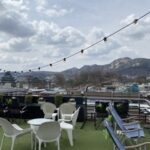
11:30am. Now that I had checked in and secured everything in my room, I contemplated lying down to sleep. I stared at the roof garden across from me with its artificial lawn. I could sleep, but then I might not be bold enough to leave this room later if I hesitated now. I had to push through and conquer my mind and my fears. I was here for a reason after all – a curious rooftile from the kingdom of Silla that had given me a story to tell, and a story to unravel. I had come here in search of both.
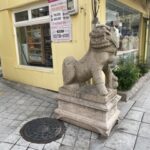
Stepping back out of the hotel, I took in every detail around me – especially the two weathered stone lion dogs that marked the entrance to my hotel and the coffee shop opposite. Then I set off with only a vague idea of where I was headed. I walked through the winding streets of Insadong while trying to untangle the different aromas: garlic and soy, the sweet fish pastries stuffed with sweet red bean paste, and spicy gochujang sauce that made my mouth water as I contemplated whether or not to risk trying the tteokbokki. With the sweet came the sour. From time to time, the less savoury smell of sewers would hit me, and I would walk quicker while holding my breath. Still better than the unwashed livestock lorries coming and going from the abattoir back home.
I wanted a general convenience shop most of all so that I could get a travel card for the subway. However, I’d never contemplated before just how reliant on brand names I had been as I looked all around at the shop windows for a hint to which building would be the correct one. Co-op, Tesco, Premier…I knew by the name what those were back home, but here? I only knew of Seven Eleven and I hadn’t found one. I could read Hangul and and knew a few words, but that wasn’t any help to me right now.
I kept moving, turning down one street then another. I memorized what I saw while looking for distinctive buildings I could use as way markers later. The architecture began to change again as I left Insadong and came towards Bukchon Hanok Village. The traditional buildings rising above modern-day Seoul along narrow roads snaking through the 600-year-old village. White clay walls and timber frames peaked over brick walls that enclosed each property and the tiled roofs flowed seamlessly into the landscape and the mountains rise higher still beyond. It was a key aspect to the architecture of hanoks that they blended with the environment. The Joseon Dynasty buildings of Bukchon were a testament to those design principles with its use of earthen materials and inclusion of evergreen and deciduous trees.
It was much quieter now I had left the main roads. There were signs throughout the streets asking for people to be quiet as it was a residential area as well as a tourist hotspot. Since Korea was still under pandemic restrictions, there was hardly anyone walking around outside, especially this far out from Seoul. For a brief time, the city was mine alone.
12:57pm. I had finally come as far up the hill as I was comfortable going, the last road high above a small valley. Across from me was one of forty-three mountain peaks erupting through the ocean of tarmac, concrete and glass. Vehicles cruising along the road on the adjacent mountain glistened in the sun like jewels.
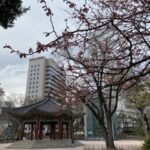
Below me was Gyeongbok Palace surrounded by its lush green gardens that were coming to life within the shelter of the old palace walls and the mountains. The trees were coming into leaf and a few cherry blossoms showed the first flash of pink. The Great Pagoda rose above everything. Ten tiers in total, the pagoda rose up on five white stone platforms that supported the main pagoda. Five tiers of white walls and faded red lacquer beams, each ascending level, smaller than the last and tiled with slate.
And somewhere amongst this city were the stories I had come searching for.